Does the Moon Actually Rotate?

You’ve probably heard the moon never seems to turn, always showing us the same face—but that’s just an illusion. Interestingly, the moon does actually rotate, but it does so in such a synchronized way that from Earth, it feels like it doesn’t truly spin.
What Exactly Does “Rotate” Mean?
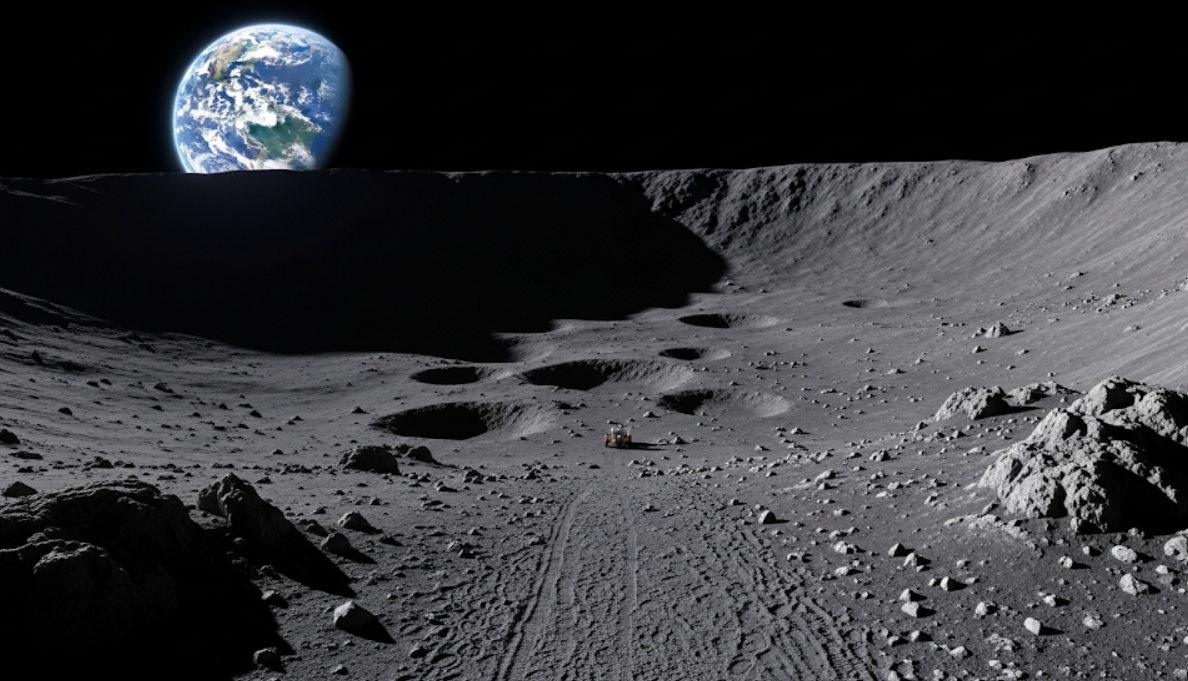
Let’s break it down: the moon takes about 27.3 days to orbit Earth (called the sidereal month) and the same amount of time to complete a full spin on its axis. Because these two cycles match, we constantly see the same “near side”—you know, the one with those familiar craters and maria. That’s why from our viewpoint, the moon seems to hang still in the sky—it’s always facing us.

But… What About That “Dark Side”
You may have heard of the moon’s “dark side,” but that term’s misleading. It’s actually the far side, never visible from Earth—but it’s not perpetually shadowed. In reality, every part of the moon experiences daylight during its orbit, just like Earth does during its rotation. The far side is called “dark” only because we don’t see it—not because the sun never shines on it.
Why Does the Moon Stay Presenting the Same Face?
This is where tidal locking (or synchronous rotation) comes in. Long ago, the moon spun faster. But Earth’s gravity tugged on it, creating slight bulges. As those bulges swung around, Earth’s gravity pulled them, causing friction that slowed the moon’s rotation—until its day matched its month.
Once that happened, there wasn’t any differential torque left to slow it further, locking the moon’s “day” and orbit into sync. Now, it takes exactly one lunar month (about 27 days) to complete both a spin and an orbit, meaning the same face always visits Earth. You can view al of the moon phases and their names that occur within this lunar month.
Can We Ever See Behind the Moon?
Sort of! Due to tiny wobbles—called libration—we can glimpse about 59% of the lunar surface over time, but not all at once. When the moon is closer (perigee) or further (apogee), or when Earth’s tilt shifts things, we get those slight variations.
Modern missions like Apollo and unmanned orbiters have finally imaged the entire far side—we now know it’s more cratered and rugged compared to our familiar near side.
So… Does the Moon Rotate?
Yes, it definitely rotates—just exactly once per orbit, making it tidally locked. That’s why from our perspective, it feels like it’s frozen in place. But astronomically speaking, it’s turning all the time.
Why It Matters
-
Understanding tides and rotations: Tidal interactions between Earth and the moon have shaped both bodies—slowing Earth’s day and gradually separating the two.
-
Exploration and science: Studying lunar libration helps astronomers target landing sites and telescope observations.
-
Common misconceptions: Clarifying that the “dark side” isn’t always dark helps correct a widely held but inaccurate myth.
Quick Recap
-
Rotational period ≈ orbital period → same lunar face points to Earth
-
Tidal locking caused by Earth’s gravitational tug over eons
-
Far side ≠ dark side—every lunar region sees sunlight
-
Libration reveals around 59% of the lunar surface over time
Final Thought
Next time you gaze up at the moon, imagine it slowly spinning in perfect harmony with its orbit. That silent, synchronized ballet is what keeps one side forever facing our world—a cosmic dance shaped by tidal forces. And while we glimpse bits of the far side thanks to lunar wobble, much of that hidden terrain remains a mysterious canvas just out of our direct view.