How Moon Dust Could Be the Key to Building Bases in Space
When you think about building a base on the Moon, you might imagine flying tons of steel, cement, and bricks from Earth 🚀. But here’s the big problem: sending heavy materials into space is ridiculously expensive. Every single kilogram costs thousands of dollars to launch.
That’s where an unusual hero enters the story — moon dust (also called lunar regolith). It’s already there, covering the Moon’s surface in huge amounts. And scientists believe it might actually be the key to building our first real homes in space.
It’s kind of like moving into a new neighborhood and using the local stones to build your house instead of importing everything.

What exactly is moon dust?
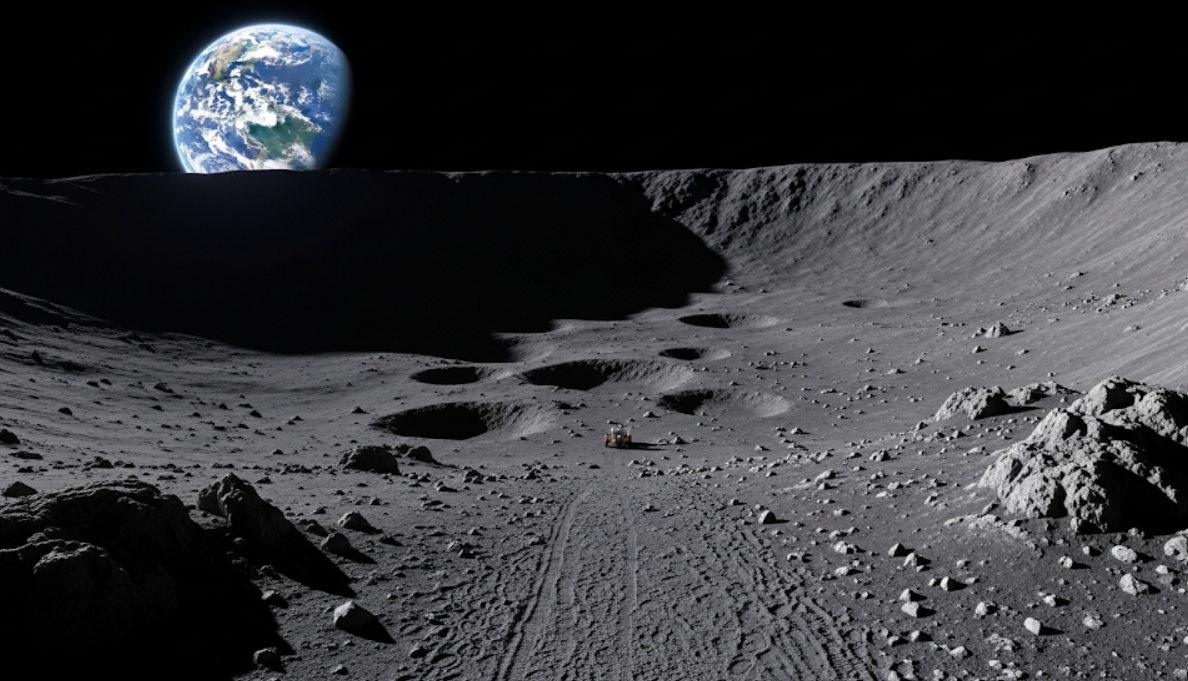
Moon dust isn’t like the dust under your bed. It’s much sharper, much finer, and a lot more dangerous if you breathe it in. This is because it’s made of tiny jagged rock particles that have been broken down over billions of years by meteorite impacts.
It has no smooth edges because there’s no wind or water on the Moon to erode it like sand on Earth. Imagine walking on tiny pieces of glass — that’s how astronauts describe it.
In fact, during the Apollo missions, astronauts complained about moon dust sticking to their suits, scratching equipment, and even making their throats sore. But the same “troublemaker” material could be a future builder’s dream.
Why scientists are so excited about moon dust
There’s a simple reason: we can use it to make building materials without bringing much from Earth.
When you heat lunar regolith at very high temperatures, it can be fused into a solid material — almost like bricks. Some researchers are experimenting with mixing it with binding agents (possibly made from ice water found on the Moon) to create strong construction blocks.
Others suggest 3D printing structures directly from moon dust. That’s right — instead of laying bricks, robots could “print” entire buildings layer by layer. No human needs to do the heavy lifting.
And here’s the real kicker — these structures would be naturally resistant to radiation, micrometeorite impacts, and extreme temperatures, which is essential for survival in space.
Protecting humans from space dangers
On Earth, we’re safe under a thick atmosphere and a strong magnetic field 🌍. On the Moon, there’s none of that.
Radiation from the Sun and cosmic rays can be deadly over time. Tiny meteorites hit the Moon’s surface regularly at high speeds. And the temperature swings? They’re wild — from scorching heat during the day to freezing cold at night.
Moon dust buildings could act as a natural shield, keeping astronauts safe without having to bury habitats deep underground.
How building with moon dust would work
Scientists have proposed different methods, such as:
| Method | How it Works | Benefits |
|---|---|---|
| Sintering | Heating regolith until it fuses into solid blocks | Strong, no extra materials needed |
| 3D Printing | Using robots to “print” walls from dust | Quick, no human labor |
| Mixing with Binders | Adding lunar ice or other chemicals to make concrete-like material | More flexible designs |
| Regolith Bags | Filling large fabric tubes with dust to create protective walls | Simple and fast |
These methods would use equipment sent from Earth just once — after that, the Moon itself provides most of the resources.
The cost advantage is massive
Currently, sending 1 kg of material to space can cost anywhere from $10,000 to $50,000. Imagine trying to send a single house’s worth of materials! By using moon dust, we could cut the cost of construction by up to 90%.
That’s money saved for other important things like oxygen systems, energy storage, and food production.
Not just for the Moon – Mars too
Here’s where it gets even cooler 😎 — the technology we develop for moon dust could also work on Mars. Martian soil is different, but it can also be used to make bricks and building materials.
So the Moon could be our “practice ground” before we try to colonize the Red Planet.
Challenges scientists still face
Of course, it’s not as simple as scooping up dust and building a house. Moon dust is razor-sharp and sticks to everything because it’s electrically charged. That makes it dangerous for human lungs and eyes.
Also, the Moon has no weather to wash it away, so it will always be there — clinging to suits, machines, and equipment. Scientists are working on special coatings and cleaning systems to deal with this problem.
And there’s the question of how to power large-scale construction on the Moon. Solar power works during the lunar day, but what about the 14-day-long night? Backup energy systems will be needed.
Why this matters for our future in space
If humans really want to live on the Moon, or even just use it as a base for deep space exploration, we need to be able to build things locally. Moon dust is like nature’s gift — a free, abundant resource that’s already in the right place.
It’s also an important step toward self-sufficiency in space. If we can master building with what’s around us, future missions to Mars, asteroids, and beyond will be much easier.
Think of it as the difference between a camping trip where you bring everything yourself and a trip where you live off the land. One is far more sustainable.
Final thoughts
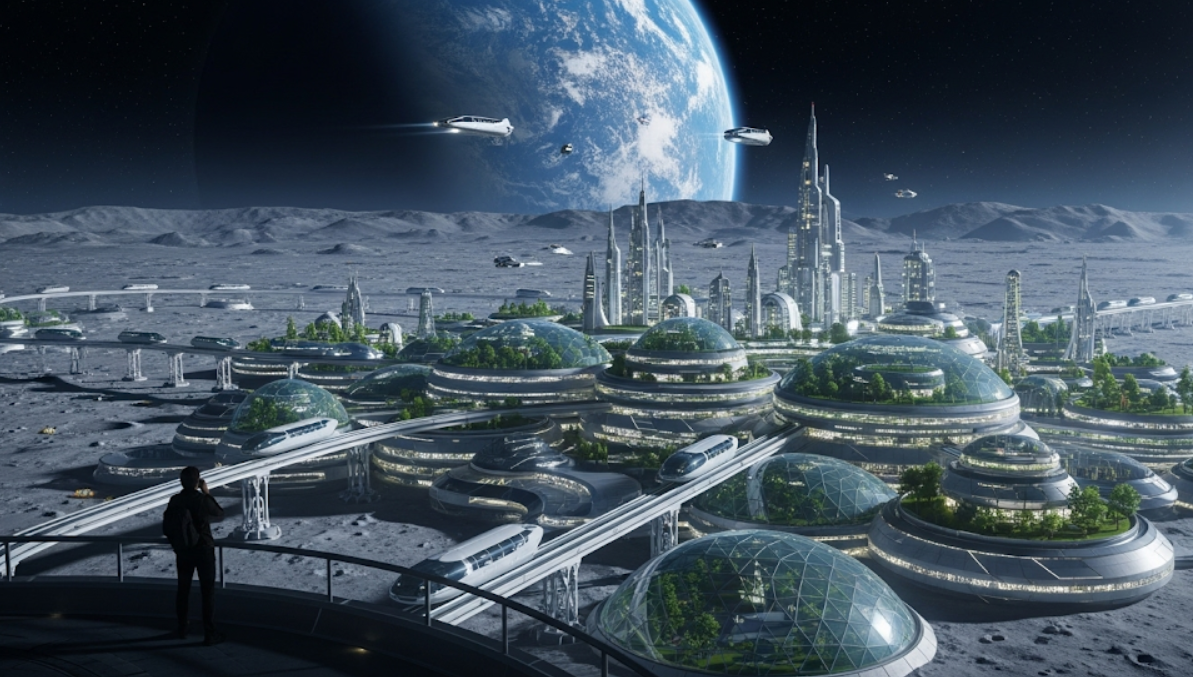
Moon dust might be annoying, even dangerous — but it could also be the foundation of humanity’s first true homes away from Earth. We’re still in the early stages of figuring it out, but within the next few decades, it’s possible we’ll see entire lunar bases built from nothing more than the Moon’s own surface.
Next time you see a photo of the Moon, remember: it’s not just a gray rock in the sky. It’s a treasure chest of building material waiting to help us take the next giant leap. 🚀
FAQs
Q1: Is moon dust safe for humans?
Not really. It’s sharp, sticks to surfaces, and can damage lungs if inhaled. Astronaut suits and filters are needed for safety.
Q2: Could we really build houses just from moon dust?
Yes. Using heat or 3D printing, moon dust can be turned into solid, durable structures.
Q3: Why not just take materials from Earth?
It’s too expensive and heavy to transport. Local materials like moon dust save a lot of cost and time.
Q4: Can moon dust be used for other things?
Yes, it could also help make roads, landing pads, and even be used to extract oxygen.
Q5: How soon could we see a moon base?
Some experts say we could have small bases in the 2030s or 2040s if funding and technology keep moving forward.