Will the Moon Ever Host a Human City? What Experts Predict by 2050
If you’ve ever stared at the Moon and thought, “Could we actually live there?” — you’re not alone.
Scientists, space agencies, and even billionaires have been talking about building homes on the Moon for decades.
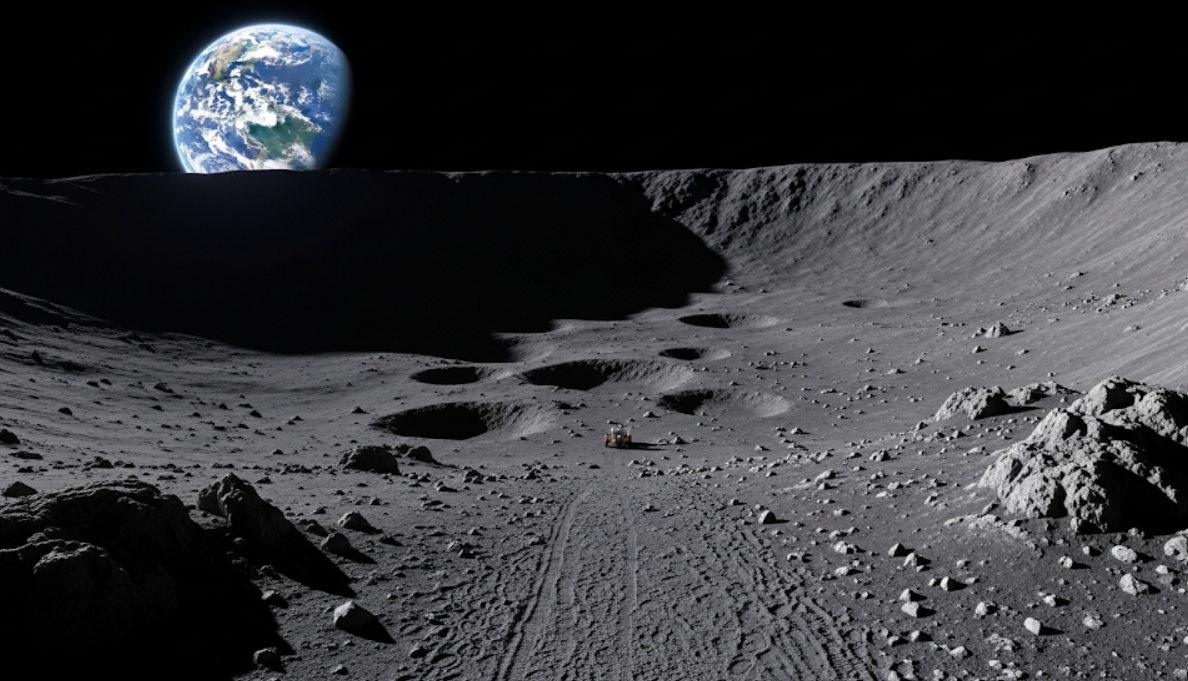
Now, with all the new space missions happening, the idea doesn’t sound like pure science fiction anymore. In fact, many experts believe that by 2050, we might actually see the first real human settlement up there.
But… is it really possible? And what will it look like? Let’s explore. 🚀

The push for a Moon city
The race to return to the Moon has restarted in a big way. NASA’s Artemis program is planning to land astronauts there again, while China and Russia are also developing their own lunar base plans.
Why all this interest? Well, the Moon is like a testing ground for deep space travel. If we can live there, we can learn how to survive on Mars and maybe beyond.
Also, the Moon might hold valuable resources — like water ice (which can be turned into drinking water, oxygen, or even rocket fuel) and rare metals that could be mined.
Why 2050 could be the turning point
Some scientists predict that it will take about 20–25 years to build the technology, test life-support systems, and set up reliable transport between Earth and the Moon.
By 2050, here’s what experts think we might see:
-
Permanent research stations, not just temporary missions.
-
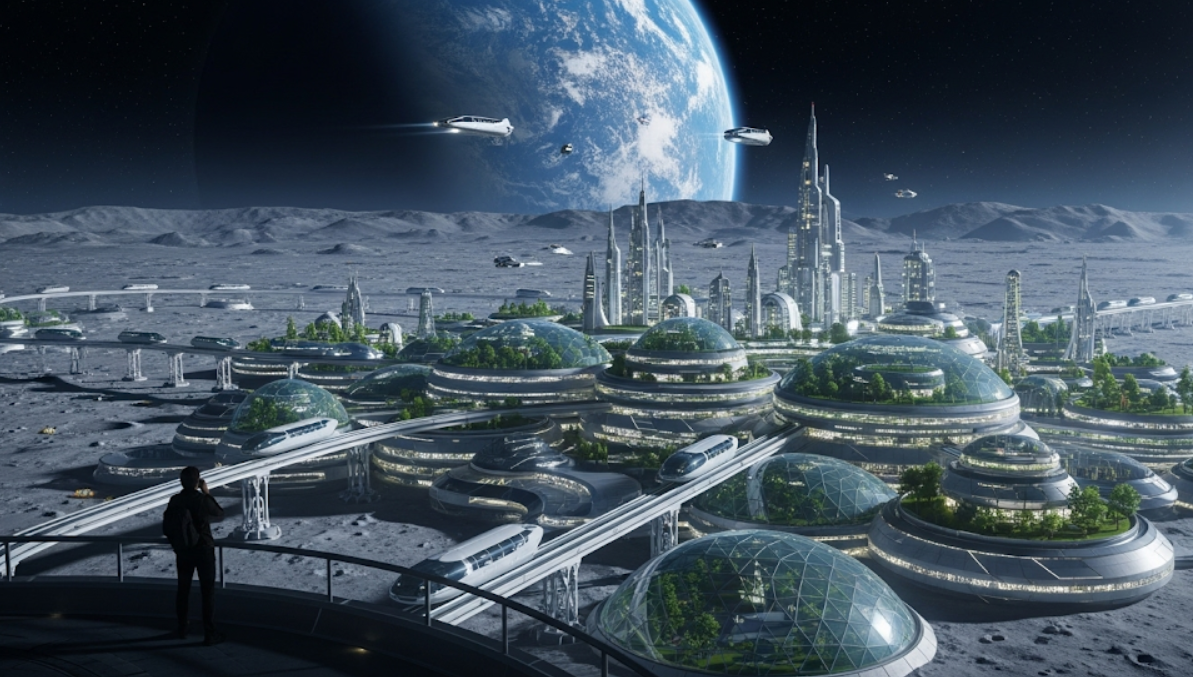
Domed habitats with controlled air and temperature.
-
Solar farms powering the whole settlement.
-
Greenhouses for fresh food production.
How living on the Moon might work
Living on the Moon isn’t as simple as just sending a rocket full of supplies. The conditions are extreme:
-
There’s no breathable air.
-
Temperatures swing from boiling hot in the day to freezing cold at night.
-
The Moon’s surface is covered in fine dust that can damage equipment.
Because of this, scientists think our first homes will be underground or inside inflatable habitats covered with Moon soil for protection from radiation.
These homes will need systems that recycle water, filter air, and grow food — because relying only on shipments from Earth would be too costly.
Potential Moon City Layout
Here’s a rough idea of what a lunar settlement might include by 2050:
| Area | Purpose | Special Features |
|---|---|---|
| Living Pods | Sleeping & personal space | Air-locked doors, private quarters |
| Command Center | Operations & communication | Linked directly with Earth |
| Greenhouses | Food production | Hydroponics & LED grow lights |
| Power Station | Energy supply | Large solar panels, battery storage |
| Research Labs | Science & mining | Lunar soil experiments, ice extraction |
| Recreation Zones | Mental health | Low-gravity sports & exercise rooms |
Who might build it first?
It’s not just NASA in the race. SpaceX’s Starship might make lunar cargo delivery cheaper, and Blue Origin is working on lunar landers. China has announced its goal for an International Lunar Research Station by the 2030s.
Some experts believe private companies will handle much of the construction, while governments handle safety and regulations.
So, the first Moon city could be a partnership between countries and companies, much like the International Space Station.
Daily life in a Moon city
Imagine waking up, pulling on your space-rated jumpsuit, and walking through a tunnel to the greenhouse to check on your tomatoes.
Gravity would be only one-sixth of Earth’s, so moving around would feel like slow-motion bouncing. 😄
Jobs could range from scientists studying lunar rocks to engineers fixing life-support systems, or even chefs preparing meals with hydroponic vegetables.
Free time might involve virtual reality calls with Earth, reading in the recreation area, or playing “low-gravity basketball.”
The biggest challenges ahead
Even with all this excitement, experts warn there are serious issues to solve before we can live on the Moon long-term:
-
Radiation – Without Earth’s atmosphere, astronauts are exposed to dangerous solar and cosmic rays.
-
Health effects – Long-term low gravity might weaken muscles and bones.
-
Cost – Sending materials to the Moon is still extremely expensive.
-
Psychological strain – Being far from Earth, with no quick return, could be stressful.
-
Sustainability – The city must recycle almost everything to survive.
Also check out: Top 5 Lunar Events You Can’t Miss in 2026 (With Viewing Tips)
Could people actually move there permanently?
Some space scientists believe that the first Moon settlers will be rotating crews, staying for months at a time rather than living there for years.
Permanent residents might come later — once life-support systems are completely reliable and affordable transport is available.
Still, by 2050, it’s possible we could have a small population living full-time — maybe 100–200 people — running science labs, mining operations, and maintenance crews.
Why this matters for Earth
A Moon city wouldn’t just be about exploration. It could also:
-
Support disaster recovery (like if we ever need to evacuate people temporarily).
-
Serve as a launch hub for Mars missions.
-
Provide new energy resources like helium-3 for fusion power.
And of course, it would inspire a whole new generation of scientists, engineers, and dreamers. 🌕
Final thoughts
So… will the Moon ever host a human city by 2050?
The honest answer: it’s possible, but not guaranteed.
If technology keeps advancing, if funding stays strong, and if international cooperation continues, we might see the first real human community on the Moon within our lifetime.
It might not be a massive “city” like New York — more like a small town — but it would be enough to prove that humans can live, work, and thrive beyond Earth.
One thing’s certain: the next few decades in space exploration will be the most exciting we’ve ever seen. And who knows? By 2050, you might be reading an article like this… from your lunar apartment window, looking down at the glowing blue Earth.