How the Moon Could Protect Earth from Dangerous Asteroids
The Moon is more than just a beautiful object we see at night 🌙. It has been a silent companion to Earth for billions of years. But did you know it might also act as a shield, protecting our planet from dangerous asteroids? While it’s not an active guardian like in science fiction movies, its size, position, and gravity could help reduce the risk of asteroid impacts on Earth.
Why Asteroids Are a Threat
Asteroids are giant rocks that orbit the Sun. Most stay far away in the asteroid belt between Mars and Jupiter, but sometimes they pass close to Earth.
-
Even a small asteroid can cause huge damage.
-
The asteroid that killed the dinosaurs 66 million years ago was about 10 km wide 🦖.
-
Scientists call space objects that could hit Earth “Near-Earth Objects” (NEOs).
A direct hit from a large asteroid could cause tsunamis, fires, and global climate change. That’s why space agencies constantly watch the skies.

The Moon as a Cosmic Shield
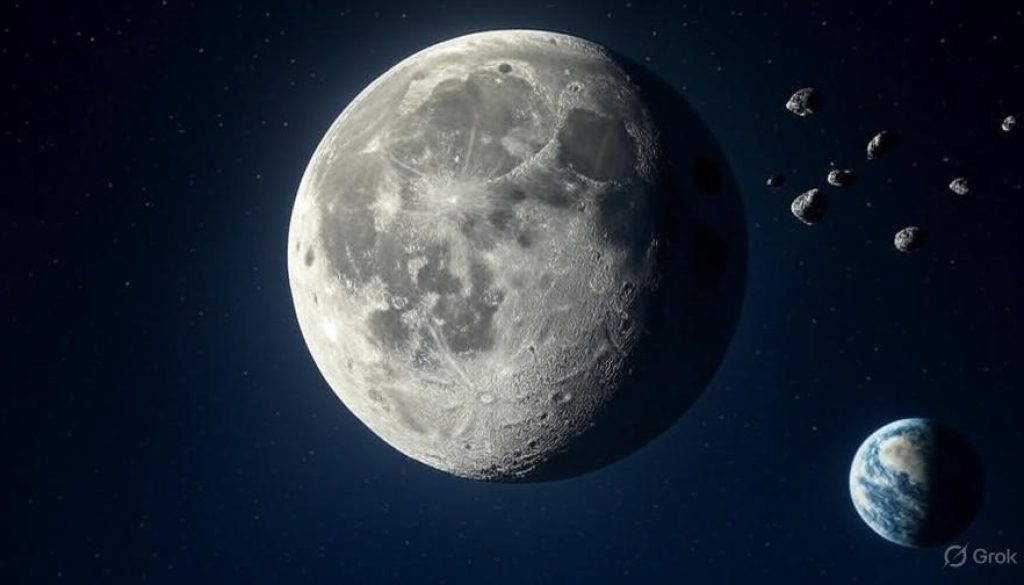
The Moon orbits about 384,400 km away from Earth. While it is much smaller than Earth, it still has enough gravity and physical size to sometimes intercept objects that could harm us.
-
If an asteroid is heading towards Earth, the Moon could block it if the path crosses its orbit.
-
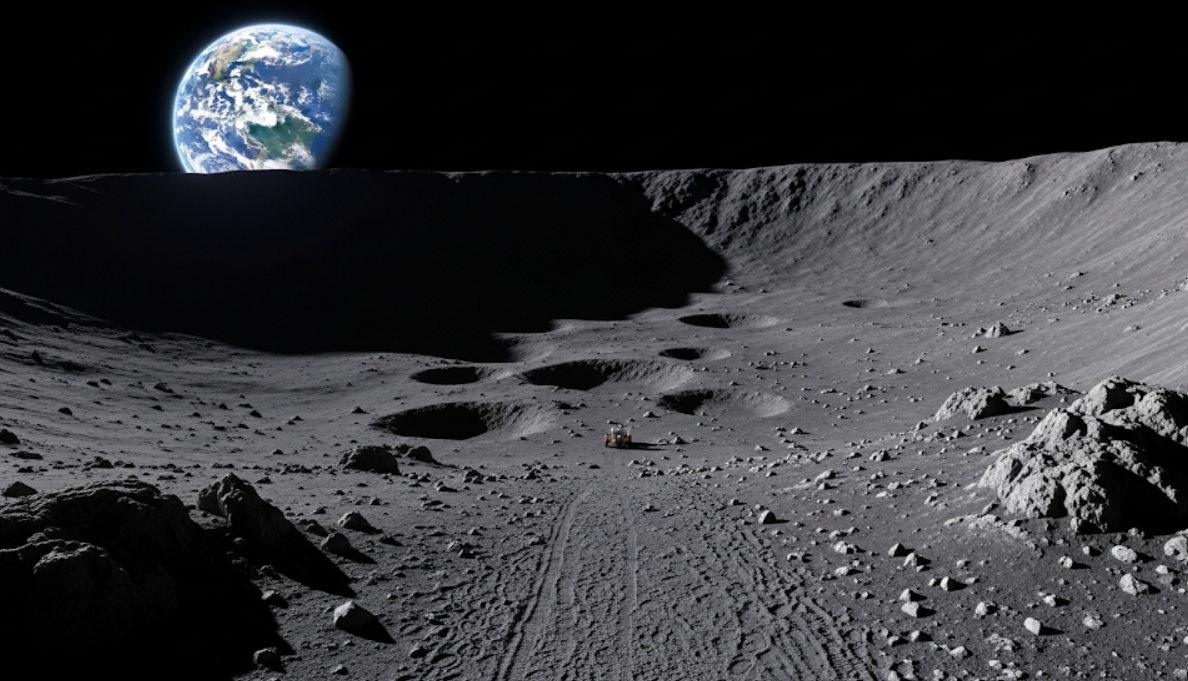
Its surface already shows thousands of impact craters, proof it has been hit many times over billions of years.
How the Moon Deflects Asteroids
There are two main ways the Moon could help:
-
Direct Impact Blocking
-
If an asteroid is on a collision course and passes near the Moon, it could crash into the Moon instead of Earth.
-
Example: The Moon’s far side has huge craters like the South Pole–Aitken basin, caused by massive impacts.
-
-
Gravitational Influence
-
The Moon’s gravity can slightly change the path of nearby space rocks.
-
Even a tiny change in direction can make an asteroid miss Earth.
-
Famous Impacts on the Moon
Scientists have recorded several asteroid strikes on the Moon. These events remind us that the Moon takes some hits instead of us.
| Year | Event | Size of Asteroid | Effect |
|---|---|---|---|
| 1178 AD | Lunar Impact seen by monks | Unknown | Bright flash visible from Earth |
| 2013 | Meteorite hit during a lunar eclipse | ~40 cm | Explosion visible for seconds |
| Billions of years ago | South Pole–Aitken Impact | ~200 km | One of the largest craters in the Solar System |
Why We Still Need to Be Careful
While the Moon does block some threats, it’s not a perfect shield.
-
It only covers a small area in space relative to Earth’s size.
-
Most asteroids approach from angles where the Moon can’t intercept.
-
Smaller asteroids can still pass by and hit Earth without the Moon’s help.
The Moon as an Early Warning System
Even if the Moon doesn’t stop an asteroid, it can help in another way:
-
A collision with the Moon could give scientists time to prepare for potential secondary debris.
-
If a large asteroid hits the Moon, fragments could still travel toward Earth, but tracking them would be easier.
Could the Moon Be Used to Destroy Asteroids?
Some scientists have suggested that in the future, we might be able to use the Moon as part of a planetary defense system 🚀.
-
We could place monitoring stations on the Moon to detect incoming threats earlier.
-
Weapons or deflection systems could be installed there to redirect dangerous objects before they reach Earth.
Table: Moon vs. Earth in Asteroid Protection
| Feature | Earth | Moon |
|---|---|---|
| Diameter | 12,742 km | 3,474 km |
| Gravity | Strong | Weak |
| Atmosphere | Thick, burns small meteors | None, everything hits the surface |
| Position | Stationary in space orbit | Orbits Earth, sometimes in asteroid path |
How Often Could the Moon Save Us?
It’s hard to measure exactly, but simulations show:
-
The Moon might block or deflect a small asteroid every few centuries.
-
Larger asteroid interceptions are rare, but possible.
-
Most asteroid protection still comes from Earth’s atmosphere, which burns up smaller meteors before they hit the ground.
More like this: How Moon Dust Could Be the Key to Building Bases in Space
Fun Facts About the Moon and Asteroids
-
The Moon’s craters can last for billions of years because there is no wind or rain to erase them.
-
Earth gets hit by about 100 tons of space dust daily — but thanks to the atmosphere, we don’t notice most of it.
-
The Moon was probably formed when a Mars-sized object hit Earth 4.5 billion years ago.
What NASA and Scientists Are Doing
Even with the Moon’s help, humans are taking extra steps to protect Earth:
-
NASA’s DART mission in 2022 successfully changed the path of an asteroid by hitting it with a spacecraft.
-
The European Space Agency (ESA) is working on similar asteroid deflection tests.
-
Observatories around the world watch the skies 24/7 for dangerous objects.
Could the Moon’s Protection Change in the Future?
Yes. As we build lunar bases and space stations, the Moon could play a bigger role in protecting Earth:
-
Moon-based telescopes could spot asteroids earlier.
-
Robots could be deployed from the Moon to intercept threats faster than from Earth.
-
Its lack of atmosphere makes it perfect for launching missions with less fuel.
Conclusion
The Moon is more than a light in the night sky — it’s a quiet guardian. Although it cannot stop every asteroid, it has likely taken many hits that could have been disastrous for Earth. In the future, we may use the Moon as a strategic base to watch for and deflect dangerous space rocks. Until then, it will keep circling our planet, occasionally taking a blow for us, and reminding us just how lucky we are to have it. 🌍💙🌙