Asteroid 2024 YR4: What NASA and ESA Are Saying About Its Lunar Risk
Asteroid 2024 YR4 has recently captured the attention of scientists, space agencies, and the public. With its unusual orbital path and potential for a lunar encounter, both NASA and the European Space Agency (ESA) have been working to analyze its trajectory, assess its risk, and inform the global community. While the asteroid poses no immediate danger to Earth, its possible interaction with the Moon raises fascinating questions about asteroid monitoring, planetary defense, and the safety of future lunar missions.
The keyword Asteroid 2024 YR4 lunar risk has become a trending topic due to media reports, online speculation, and official statements from space agencies. This article provides a complete breakdown of what NASA and ESA are saying, how they calculate risks, and what it could mean for humanity’s ongoing exploration of space.

Understanding Asteroid 2024 YR4
Discovery and First Observations
Asteroid 2024 YR4 was discovered in late 2024 by automated sky surveys. It was detected using advanced wide-field telescopes designed to identify near-Earth objects (NEOs). Early observations indicated that it had a trajectory passing relatively close to the Moon, sparking scientific curiosity and media attention.
Physical Characteristics (Size, Shape, and Composition)
Preliminary radar and optical measurements suggest that 2024 YR4 is approximately 90–150 meters in diameter, with an irregular shape typical of small asteroids. Spectral analysis indicates a stony (S-type) composition, similar to other near-Earth asteroids, meaning it contains silicate minerals and nickel-iron metals.
Orbital Path and Classification
Asteroid 2024 YR4 belongs to the Apollo group of NEOs, known for having Earth-crossing orbits. Its semi-major axis places it in a position where gravitational interactions with both Earth and the Moon can alter its trajectory over time. While not currently on a collision course, it is classified as a Potentially Hazardous Asteroid (PHA) due to its size and proximity to Earth’s orbit.
NASA’s Latest Assessment of Asteroid 2024 YR4
Tracking Methods and Observational Data
NASA uses a combination of ground-based observatories and the NEOWISE space telescope to gather high-precision data. These measurements allow scientists to refine the asteroid’s orbital parameters and predict its future positions with increasing accuracy.
NASA’s Lunar Risk Evaluation
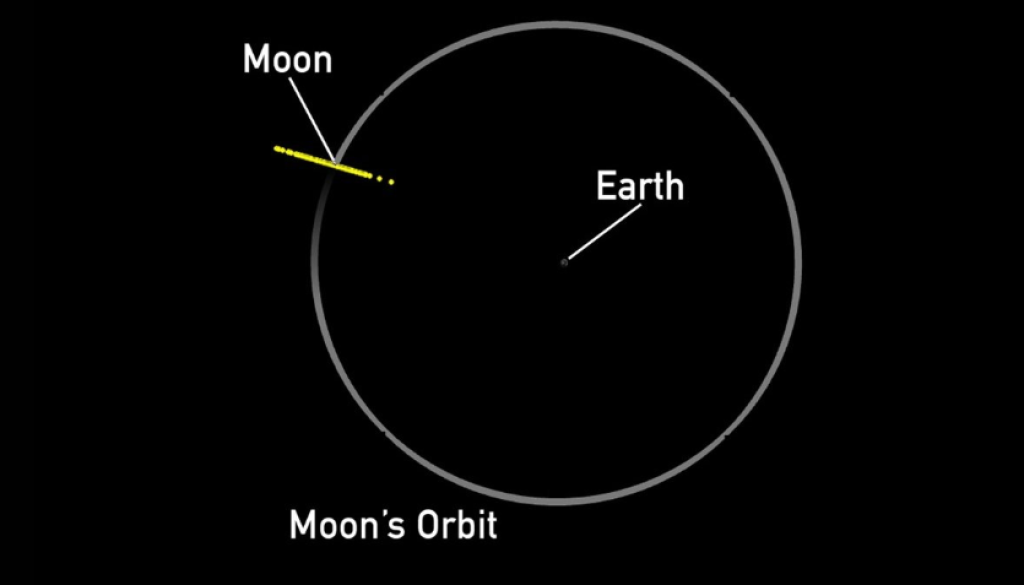
According to NASA’s Center for Near-Earth Object Studies (CNEOS), 2024 YR4’s closest lunar approach is projected to occur in the late 2030s. While the probability of a direct lunar impact remains extremely low—less than 0.05%—NASA continues to track it closely due to uncertainties in long-term gravitational modeling.
Probabilities and Predictive Models
Using mathematical simulations, NASA estimates thousands of potential orbital paths. These models incorporate gravitational influences from planets, the Moon, and other celestial bodies. Even slight changes in trajectory could alter the asteroid’s future encounters, which is why continuous monitoring is essential.
ESA’s Perspective on Asteroid 2024 YR4
How ESA Collaborates with NASA on Space Object Monitoring
ESA’s Near-Earth Object Coordination Centre (NEOCC) works alongside NASA’s CNEOS to cross-verify orbital data. They share tracking information, radar imaging, and computer simulations to maintain a unified risk assessment.
European Risk Assessment Metrics
ESA uses its own classification system based on the Palermo and Torino impact hazard scales. Currently, 2024 YR4 holds a negligible rating, meaning there’s no immediate cause for concern.
ESA’s Public Communication on the Threat Level
ESA has emphasized that while 2024 YR4’s lunar flyby is noteworthy for scientific observation, it does not pose a significant threat. They highlight its importance as an opportunity to test planetary defense systems and improve asteroid tracking technology.
Comparing NASA and ESA Risk Analysis
Similarities in Approach
Both agencies rely on high-precision astrometry, radar imaging, and statistical modeling to predict asteroid paths. They also emphasize public transparency, ensuring accurate and timely updates.
Differences in Methodology
NASA tends to focus on long-term projections, while ESA incorporates a broader range of observational sources, including amateur astronomers. This collaborative diversity improves global asteroid risk management.
The Role of International Space Collaboration
International cooperation ensures redundancy in data collection, minimizes errors, and allows for faster emergency responses should an asteroid ever pose a real danger.
Potential Lunar Impact – What Would Happen?
Estimated Collision Energy
If 2024 YR4 were to strike the Moon, it could release energy equivalent to several megatons of TNT—enough to create a sizable new crater but not large enough to alter the Moon’s orbit.
Possible Lunar Surface Effects
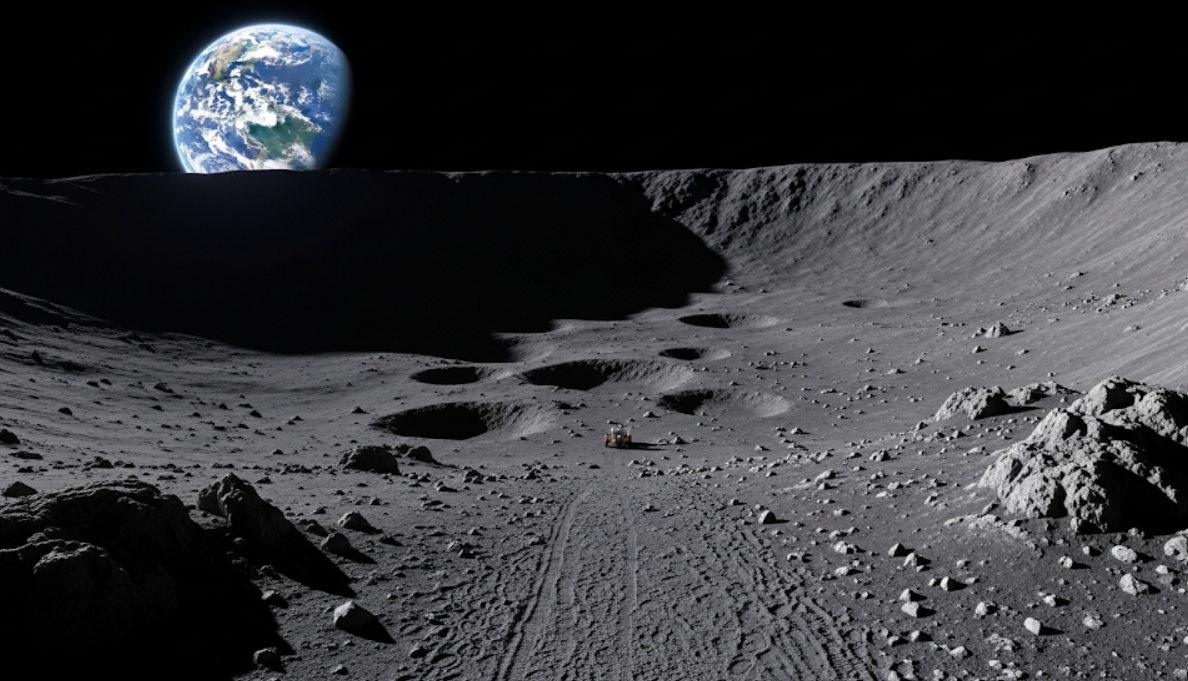
The impact would eject lunar dust and rock into space, potentially creating a short-lived debris cloud. Future lunar missions might need to navigate around these particles.
Implications for Future Lunar Missions
A lunar impact could damage satellites in lunar orbit and pose minor risks to crewed missions. However, space agencies would likely adjust mission timelines accordingly.
Also check out: Top 5 Lunar Events You Can’t Miss in 2026 (With Viewing Tips)
Tracking Technology & Detection Systems
Ground-Based Telescopes
Large telescopes such as Pan-STARRS and the Catalina Sky Survey play a crucial role in discovering and tracking NEOs.
Space-Based Observatories
Satellites like NEOWISE and ESA’s upcoming NEOMIR mission provide continuous monitoring from above Earth’s atmosphere.
AI and Machine Learning in Asteroid Prediction
Artificial intelligence helps process vast amounts of tracking data, improving prediction accuracy and early warning capabilities.
Public Concerns & Media Coverage
How the News Has Been Presented
While some media outlets have sensationalized the story, space agencies stress the scientific importance rather than imminent danger.
Common Myths vs. Scientific Reality
Contrary to popular myths, a lunar impact would not cause major problems for Earth. The Moon acts as a natural shield, absorbing impacts that might otherwise head our way.
Government and Space Policy Responses
Planetary Defense Initiatives
Projects like NASA’s DART mission and ESA’s Hera mission demonstrate real-world asteroid deflection capabilities.
Policy Changes Triggered by Asteroid Monitoring
Regular asteroid risk assessments have influenced global space policies, encouraging investment in early-warning systems.
How Scientists Prepare for Potential Threats
Simulation Exercises
Scientists regularly conduct simulation drills to test response strategies for hypothetical impact scenarios.
Evacuation and Communication Plans
Although unnecessary for a lunar event, such plans exist for Earth-impacting asteroids, ensuring global readiness.
Frequently Asked Questions (FAQs)
Q1: Is Asteroid 2024 YR4 dangerous to Earth?
No. Its current trajectory does not bring it into collision with Earth.
Q2: Could it hit the Moon?
Yes, but the probability is extremely low, less than 0.05% according to NASA.
Q3: How big is Asteroid 2024 YR4?
Estimates suggest 90–150 meters in diameter.
Q4: When is its closest approach?
Projected for the late 2030s.
Q5: Who is tracking it?
NASA, ESA, and other international observatories.
Q6: Could a lunar impact affect Earth?
Not significantly; effects would be mostly localized to the Moon.
Conclusion – Looking Ahead at Asteroid Monitoring
Asteroid 2024 YR4’s story highlights the importance of global cooperation in space monitoring. While its lunar risk is minimal, it serves as a valuable case study in planetary defense. NASA and ESA’s coordinated efforts ensure that humanity remains prepared for any future celestial threats.